Practicing discernment. This is one of the most powerful lessons I’ve learned through my yoga journey. Yoga is not just about postures and movement. It is also about clarity. It’s about the ability to pause, to breathe, and to see things as they truly are. In yogic philosophy, this practice is called viveka. Viveka is a Sanskrit word for discernment. The ability to see reality clearly and to distinguish the real from the unreal.
I first encountered the word viveka during my yoga teacher training. I thought of it simply as “making better choices.” But as I’ve deepened my practice, I’ve realized discernment goes far beyond decision-making. It is about recognizing what is real versus what is illusion. What aligns with truth versus what pulls me further into confusion. What serves connection versus what fuels division.
When Discernment Felt Impossible
There have been times in my life when discernment felt out of reach. This was especially true when I experienced burnout and when I found myself in environments of toxicity. When I as running on empty, simply trying to survive the next crisis, clarity felt like a luxury.
In those moments, I couldn’t hear my inner teacher at all. Instead of discernment, I relied on autopilot. I said “yes” when I should have said “no.” I tolerated what was harmful because I felt powerless to change it. I convinced myself I had no choice but to keep going. The fog of exhaustion made it nearly impossible to tell what was true or what was nourishing.
Looking back, I see how far I strayed from viveka during that time. I confused urgency for importance, compliance for peace, and survival for alignment.
Returning to the Yamas and Niyamas
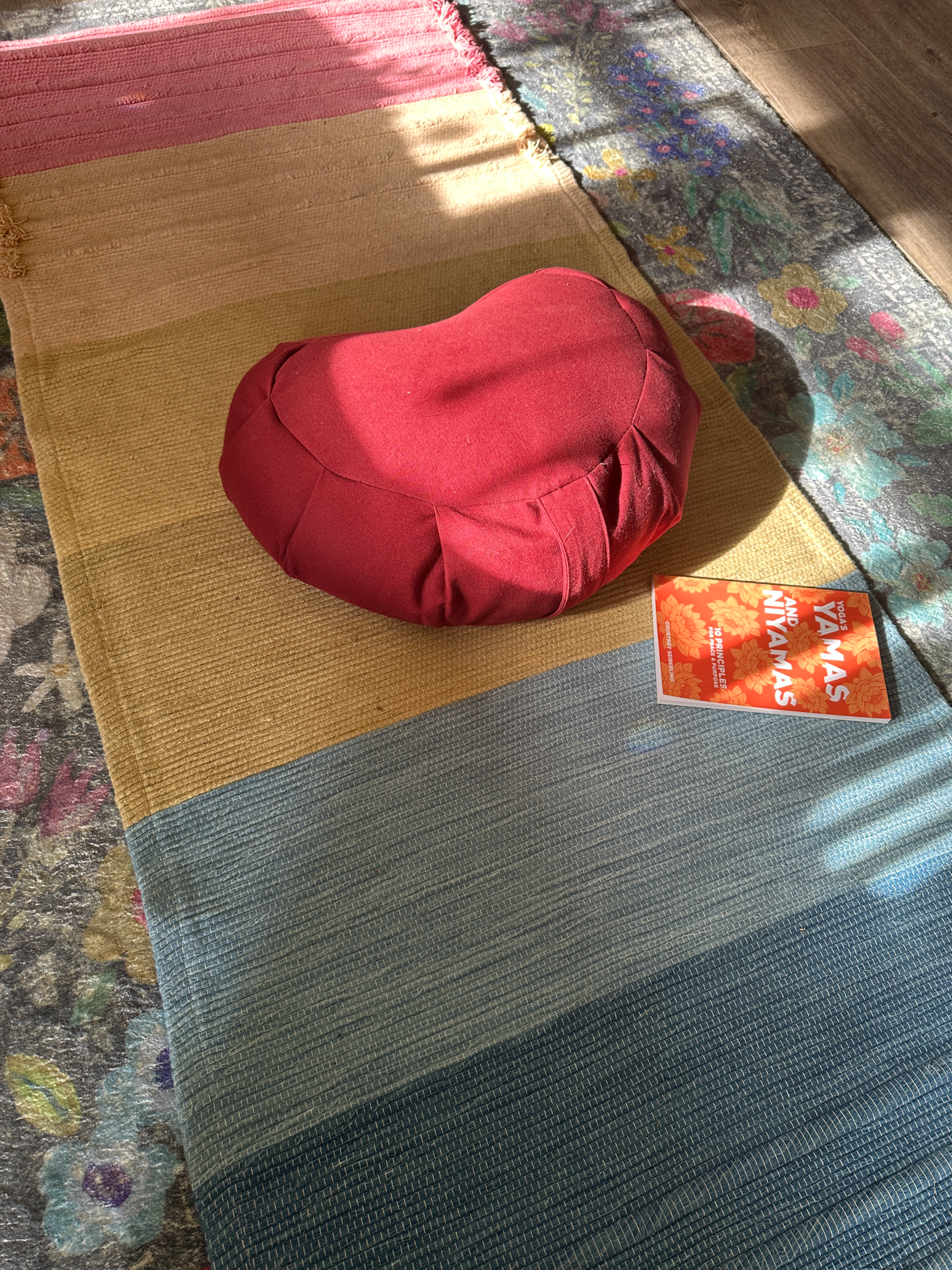
It was yoga’s ethical framework, the yamas and niyamas, that supported me during my recovery from burnout and also from the ensuing chaos of having my job eliminated. Ahimsa (non-harming) asked me to consider how I was harming myself by staying silent or ignoring my limits. Satya (truthfulness) asked me to admit what was unsustainable, even if it was uncomfortable.
Practicing discernment in that context meant making hard choices. Accepting my situation. Stepping back and setting boundaries over my last months. And distancing myself from the dysfunction that was draining me. It wasn’t easy, but clarity rarely comes without courage.
The Broader Struggle We Share
I’ve come to see that my struggle with discernment in burnout isn’t just personal. It’s cultural. We live in a society that glorifies busyness, that rewards speed over depth, and that often confuses loudness with truth. In this constant rush, it’s no wonder so many of us lose sight of what matters.
Discernment asks us to do the opposite of what culture tells us. It invites us to pause instead of react. To question instead of blindly accept. To choose clarity instead of distraction. Without discernment, we’re easily swept up in cycles of division, fear, and reactivity in all areas of our lives.
On the Mat, Off the Mat
On my mat, discernment looks like knowing when to challenge myself and when to rest. There are days I want to push deeper into a pose. While exploring my breath and sensations, I learn that today is not the day. Other days, it nudges me to lean into the discomfort, to explore my edge. To find that sweet spot between my comfort zone and pain.
Off the mat, discernment is that same quiet voice, the inner teacher. The one that reminds me to choose responses aligned with my deeper values rather than my passing emotions or external pressures. And when I’ve lost my way, yoga always offers me a path back: through breath, stillness, and self-inquiry.
A Daily Practice
I wish I could say I always get it right. I don’t. Some times I speak too quickly. I act from impulse. I fail to see clearly. But yoga has taught me that discernment is not a destination; it is a daily practice. Each breath, each interaction, offers another chance to notice, to pause, and to choose with intention.
This is why I continue to come back to the mat. And to continue to learn. To begin again and again. It’s not about perfecting poses for me. For me it is all about remembering how to live with clarity and compassion. Especially now when life feels confusing, challenging, heavy, or toxic.
Discernment is not easy, but it is essential. It is the quiet strength that helped me step out of burnout. It can help us step out of division and back into alignment with truth.
It’s a practice I need now more than ever. And maybe you do too.